
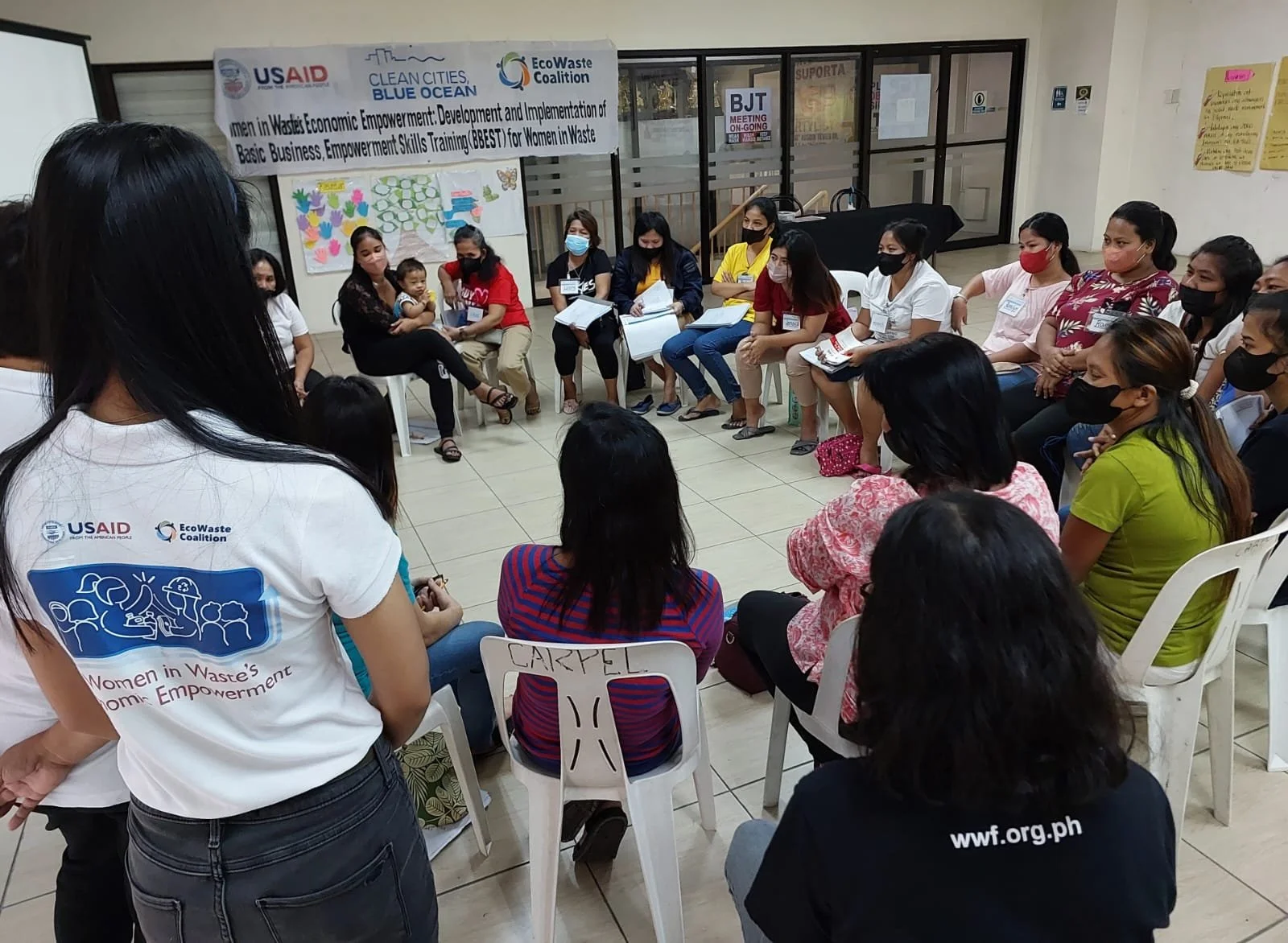
Continuing Transformational Support to Women in the Philippines
A USAID program in the Philippines organized informal female waste workers, who collect and sort much of the region's recyclable waste before it can end up polluting rivers and oceans, into women-led associations, pairing them with business and waste-management training aimed at raising their incomes. That collective structure let workers negotiate directly with recyclers and corporate buyers, securing legal supply contracts that had previously been out of reach for unregistered individual workers. When the funding freeze hit, it halted plans to expand the program to other countries and left the newly formed women's associations financially stranded. Members reported struggling even to afford the bus fare needed to convene meetings. Rather than let the work disappear, the former project team pivoted to establish a new regional NGO to institutionalize and scale the model independently. One program participant, a survivor of domestic abuse, shared that she gained not only hard skills but a vital belief in herself and knowledge of her rights, both at home and in the community, a shift other participants described as well, realizing they were capable of achieving far more than society expected of them.